


Digital Foil Stamping: Metallic Color Meets Fine Art Paper

Updated: Aug 26
Digital foil stamping is a specialty printing technique that combines foil stamping with color printing. Through a “foil-first, print-after” process, metallic foil is first stamped onto paper, and color printing is then overlaid on top of the foil surface. This allows a foil that originally has a single metallic appearance to display metallic gradients, rainbow-like light effects, localized reflections, and multi-layered lighting effects.
Compared with traditional foil stamping, which usually uses a single foil color to create a clear metallic effect, digital foil stamping is more suitable for expressing details such as starlight, water reflections, neon lights, halos, metallic accessories, and background highlights in illustrations. It does not necessarily pursue the strongest metallic brightness; instead, it allows metallic shine, color printing, and visual storytelling to blend naturally.
Digital foil stamping can also be applied to fine art paper with shallow textures, allowing the stamped areas to retain the paper’s original tactile feel, surface texture, and light-shadow variation. For IP trading cards, illustration posters, postcards, art stickers, and collectible paper goods, it offers a form of expression different from both traditional foil stamping and cold foil printing.
【Case Study: Illustration Posters and Detail Expression】
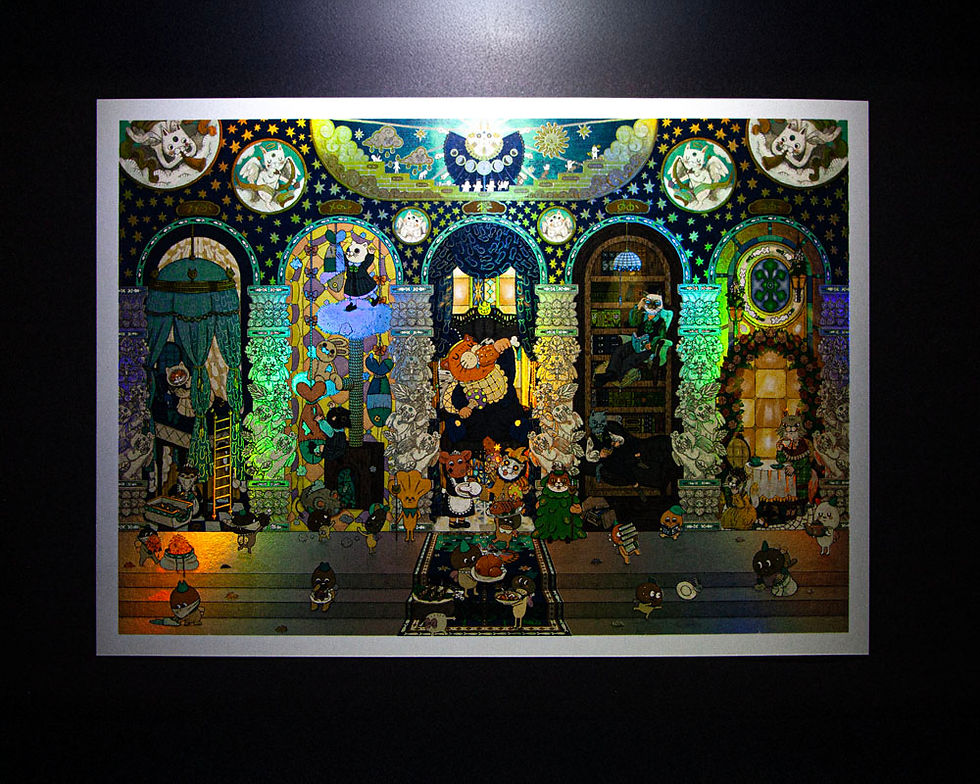
Work Title: 貓王國
Designer: 異想之森 (@fantasyforest0301)
Dimensions: 260x360mm
Technical Highlight: Plane Laser Foil Application
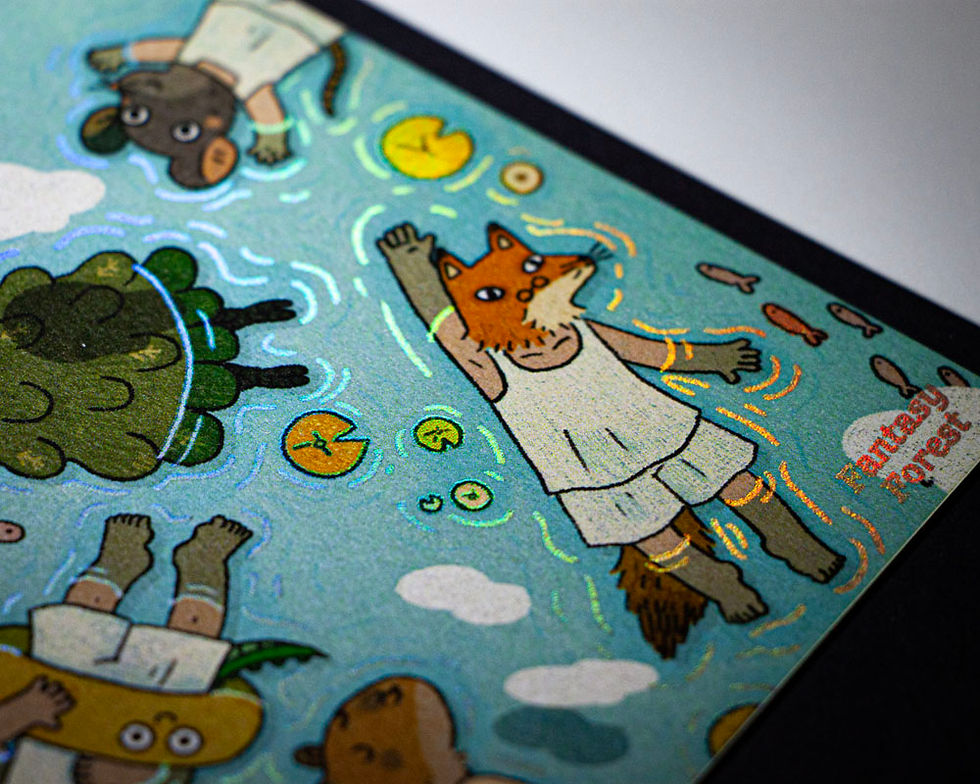
Expert Review: From the printing details, it is clear that even after metallic processing, the paper's original texture remains visible. Digital foil weaves metallic luster into the layers of the artwork, enriching the detail rather than simply masking it.
The close-up reveals that the paper's tactile feel is preserved, avoiding a synthetic or plastic appearance.

Compared to traditional top-layer foil, the metallic intensity is softer, but the overprinted ink adds a richness and depth that makes the artwork's details feel more vibrant.

Work Title: 原野星圖的奔馳者 銀駿Gallop太空馬
Designer: 新願藝術 (@newwish.art)
Dimensions: 270x360mm
Technical Highlight: Cosmic Application of Plane Laser Foil
Expert Review: The Plane Laser foil creates a mesmerizing seven-colored light flow as the viewing angle shifts, perfectly complementing the cosmic theme and creating a dynamic sense of depth.

【Showcase: IP Trading Cards & Postcards】
Work Title: 不良牟尼
Designer: 印刷人不想做的事 (@holo_solution)
Finished Size:63x88xR3mm
Technical Focus:The character area uses the white paper base, making the colors more vivid and the lines sharper. The background area uses plain holographic silver foil as the base, giving sunlight, neon lights, water reflections, and metallic elements a stronger sense of light.
A large-area digital foil stamping test on the sunlight reflection area in the background, creating A large-area digital foil stamping test on the water reflection and sky areas in the background. The A large-area digital foil stamping test on the sky and mountain reflection areas in the background, A large-area digital foil stamping test on the night market lights and signboard areas, creating a s
Work Title: 露涅希亞
Designer: 印刷人不想做的事 (@holo_solution)
Finished Size:63x88xR3mm
Technical Focus: Most of the artwork uses the white paper base, making the colors more vivid and the lines sharper. The halo, accessories, and selected details use plain holographic silver foil as the base, allowing the reflections to be “lit up” from specific angles.
Expert Comment: Compared with large-area holographic effects, the digital foil stamping in this piece works more like a detail accent. It does not overpower the main color printing, but adds a subtle layer of light and depth to the character as the viewing angle changes.

Work Title: 神明打工卡
Designer: 雞童可愛宮 (@taiwanqgods)
Dimensions: 63x88xR3mm
Technical Highlight: Application of Plane Laser foil on background radiance.

Beyond illustration, utilizing professional printing processes allows IP characters to transcend the limits of digital media, significantly increasing their collectible value.

Work Title: 一起自在漂流著_波光粼粼版
Designer: 異想之森(@fantasyforest0301)
Dimensions: 105x148mm
Technical Highlight: Plane Laser foil application on delicate strokes and typography.

This design utilizes digital foil as a "Metallic Fifth Color." By focusing on hand-drawn strokes rather than solid blocks, the foil integrates naturally into the colored pattern, rivaling the quality of traditional plate-based stamping.

【Showcase: Stationery & Color Development】
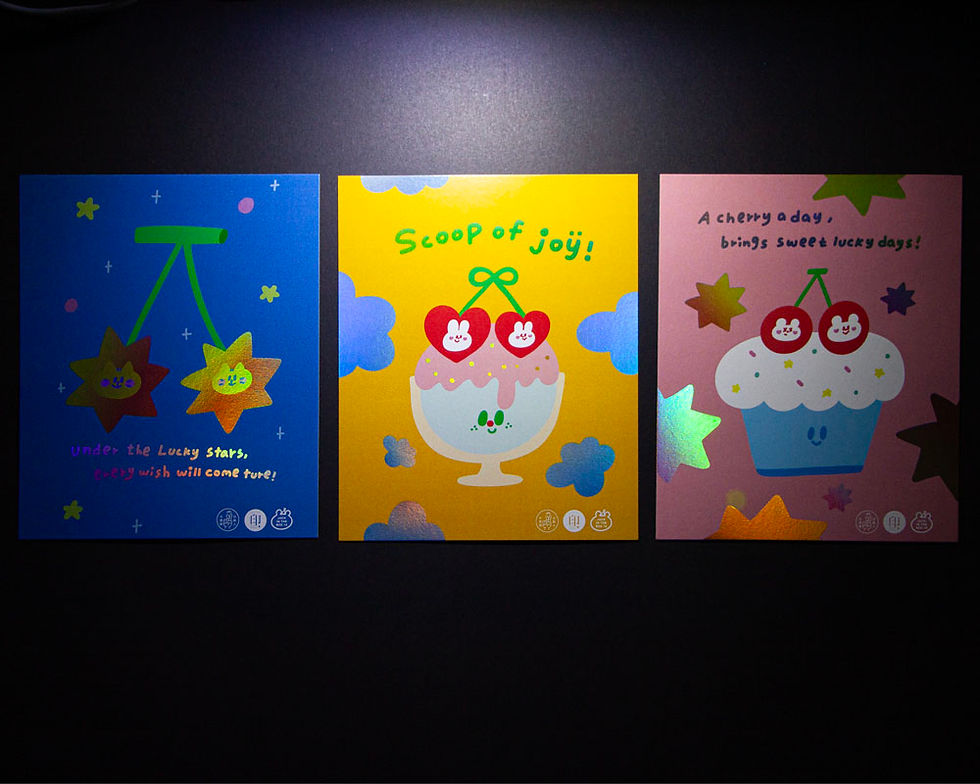
Work Title: Golden Wishes 櫻桃小卡
Designer: 傑克在箱子裡 (@jackinthebox.10)
Dimensions: 148x105mm
Design Tip: By overprinting gradients on silver foil, designers gain an infinite color palette. Metallic effects are no longer restricted to fixed foil catalog numbers.


Work Title:福馬臨 好馬牌 春聯
Designer: 樂墨書法-蕭聖儒 (@lovemore_calligraphy)
Dimensions: 170x170mm
Technical Insight: To achieve a "Gold" look, you can overprint yellow on silver foil. However, using True Gold Foil directly provides a brilliance and purity that is sharper than silver-yellow overprinting. While gold foil is stunning, silver foil offers the versatility to create various metallic hues (Red, Blue, Green) within the same design.


Digital Foil vs. Cold Foil
Both technologies utilize the "Foil First, Print Later" sequence to overlay color. However, Cold Foil is limited to smooth, non-absorbent surfaces like synthetics or coated boards. Digital Foil Stamping by Holo Solution can be executed on textured art papers, allowing the metallic pattern to follow the paper's natural peaks and valleys, honoring the tactile nature of the stock.

What Should You Consider When Designing for Digital Foil Stamping?
Digital foil stamping can create rich metallic lighting effects, but the design still needs careful consideration of image hierarchy and base material selection.
If an entire image uses large-area holographic effects, the main subject may become less clear. If the effect is used locally, the reflection can become a visual focal point. In general, it is recommended to keep characters, text, or important information on the white paper base, so that colors and lines remain clear. Background light sources, decorative details, or material elements can then be placed in foil-stamped areas to create a more defined visual hierarchy.
In addition, after color is printed over metallic foil, the final color will change depending on lighting, viewing angle, and paper surface. If the artwork requires high color accuracy, proofing is recommended before production.
FAQ: Common Questions About Digital Foil Stamping
What is digital foil stamping?
Digital foil stamping is a “foil-first, print-after” specialty printing process. Metallic foil is first stamped onto paper, and color printing is then overlaid on the foil surface, allowing the foil to display multi-color gradients, rainbow-like light effects, localized reflections, and richer image depth.
What is the difference between digital foil stamping and traditional foil stamping?
Traditional foil stamping usually uses fixed foil colors, creating a clear and bright metallic effect suitable for logos, text, and borders. Digital foil stamping can overprint color images on metallic foil, making it more suitable for illustration lighting effects, multi-color metallic gradients, starlight, water reflections, neon lights, and fine details.
What is the difference between digital foil stamping and cold foil printing?
Cold foil printing and digital foil stamping both use a foil-first, print-after concept. However, cold foil printing is usually more suitable for smooth, non-absorbent materials such as plastic film, synthetic paper, or coated paper. Digital foil stamping can be applied to fine art paper with shallow textures, allowing metallic shine to appear while preserving the tactile feel of the paper.
Can digital foil stamping create multi-color metallic gradients?
Yes. Digital foil stamping can overprint color inks on silver foil, plain holographic foil, or other metallic bases to create metallic red, metallic blue, metallic green, rainbow gradients, and multi-color metallic light effects.
Can digital foil stamping be applied to fine art paper?
Yes, but the paper must be suitable for processing. Digital foil stamping can be applied to fine art paper with shallow textures, allowing the foil-stamped areas to retain the paper’s original tactile feel and surface lighting variation. If the paper texture is too deep, it may affect stamping completeness.
What types of design are suitable for digital foil stamping?
Digital foil stamping is suitable for designs that require lighting variation and collectible value, such as IP trading cards, illustration posters, postcards, art stickers, collectible cards, packaging stickers, and limited-edition paper goods. Starlight, water reflections, neon lights, halos, metallic objects, and background highlights are especially suitable for digital foil stamping.
Can printing yellow over silver foil replace gold foil?
Printing yellow over silver foil can create an effect close to gold and can also extend into a wider range of metallic colors. However, if the goal is to achieve a very pure, bright, and strong gold appearance, using gold foil directly will still produce a more brilliant result.
Giving Design One More Language of Light and Shadow
The value of digital foil stamping is not only to make printed pieces shine, but to give designers one more “language of light and shadow” to work with.
It can bring visual changes to sunlight, water reflections, starlight, metal, neon, halos, and magical effects on paper. It can also allow illustrations, cards, and fine art paper goods to show different visual layers as the viewing angle changes.
If you are developing IP trading cards, collectible cards, art stickers, illustration posters, or specialty printed paper goods, digital foil stamping can become a new way to interpret your artwork.
Every design requires different foil stamping areas, paper choices, and metallic bases. If you have an illustration, card, sticker, poster, or packaging design that you would like to try with digital foil stamping, feel free to provide your design file or initial concept for evaluation.
Holo Solution can help you confirm
- Which areas are suitable for keeping the white paper base
- Which areas are suitable for using plain holographic silver foil or metallic foil
- Whether localized accents or large-area reflections are more suitable
- Whether the paper can preserve its tactile feel while completing the process
- How to balance print color, metallic shine, and overall visual hierarchy
Contact Holo Solution and give your design one more layer of light on paper.


